
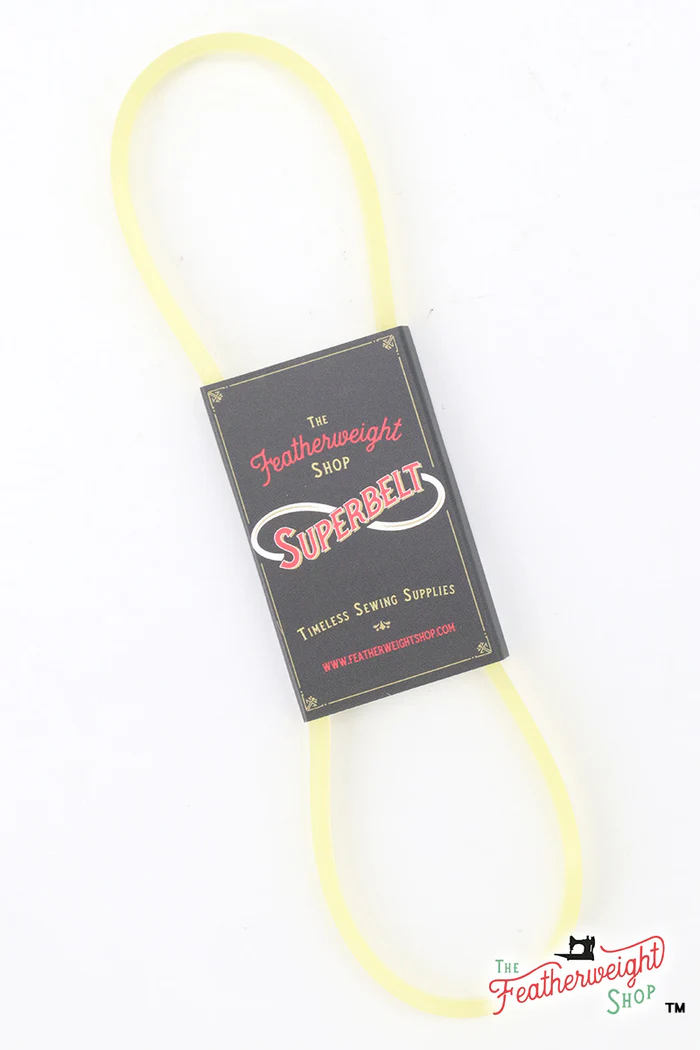
SUPERBELT, WHITE V-Belt for Singer Featherweight 221 or 222
$11.95
A Belt That's Lost Its Grip? Easy Fix.
Over time, Featherweight belts can loosen or stretch, making the motor work harder and your stitches slower. If your machine's belt slips or squeaks—or looks shiny and glazed—it's likely time for a refresh.
Easy fix: swap in the Superbelt. Two years in development, it's the quality replacement belt the Singer Featherweight has been waiting for. These belts are much softer, allowing the motor to run faster with less resistance—so your machine works more efficiently, the motor is under less strain during normal sewing, and the life of your 221 & 222 Featherweight motor is extended. The Superbelt restores that perfect balance of power and glide, helping your Featherweight hum right along again.
This is the Translucent White Superbelt—a lovely match for the white and pastel Featherweights. It's also available in classic Black, right at home on black and vintage-painted machines.
How to Replace and Install the Featherweight Belt
To replace and install the belt, you'll raise the motor up. There's a screw on the back of the motor housing (seen from the front of the machine at the right side, behind the hull). Standing over the machine with an appropriately sized screwdriver in your right hand and your left hand holding the motor, unscrew it just slightly and adjust the motor up a little bit so your current belt loosens all the way. Remove the belt from around the motor pulley and handwheel, then place the new belt in the same manner, making sure it is tucked into the correct position on the handwheel.
Protect her finish: place a soft cloth between the screwdriver and the machine's hull—that oddly placed screw on the motor housing bracket can scratch the finish otherwise.
If Your Belt Climbs to One Side
Update! One of the Superbelt's advantages is its superb grip on the handwheel. In two years of testing, though, we've discovered a few handwheels with a slight variation in their original manufacturing—and because the belt grips so well, it's possible for the belt to climb slightly to one side. No worries at all if this happens (it just means your belt is gripping extremely well, which is a good thing!)—the remedy is very simple.
Superbelts are treated with what's called belt dressing in the manufacturing process—much like some automotive belts at the auto-parts store (made and dressed differently, of course, but the concept is similar). Belt dressing actually helps with the gripping process! So, on the rare occasion the Superbelt grips extra firmly to the side of the Featherweight handwheel, rubbing a very, very minuscule amount of cornstarch around the belt surface will prevent this from happening. Cornstarch will not hurt your machine, and it truly is such a tiny amount that it disperses evenly and the belt retains its cosmetic appearance. One gal in the shop treated her Superbelt ever so slightly with a bit of cornstarch, and her Superbelt has remained perfectly seated ever since!
For those who prefer the plastic, lugged belts, we offer those as well.